When people talk about Texas music cities, one name almost always dominates the conversation: Austin.
It’s branded, celebrated, and globally recognized as the “Live Music Capital of the World.” But what if the story of Texas music didn’t begin there? What if, long before Austin became synonymous with live music, another coastal city quietly powered one of the most influential regional music ecosystems in the state?
What if Corpus Christi was once Texas’ hidden music capital?
This isn’t nostalgia. It’s history and understanding it may reveal something even more important: the future opportunity sitting in front of us today.
A City Built on Sound Before Branding Existed
In the mid-20th century, music didn’t spread through streaming platforms or viral videos. It moved through people, places, and physical routes. Musicians toured regional circuits, traveling town to town, performing in dance halls, ballrooms, clubs, and community spaces.
Corpus Christi sat at the center of one of the most active cultural crossroads in Texas.
Positioned between Houston, San Antonio, the Rio Grande Valley, and Mexico, the city became a natural gathering point for artists and audiences alike. Touring musicians didn’t just pass through they relied on Corpus as a dependable stop where crowds showed up, music mattered, and performances translated into real momentum.
Long before modern music marketing existed, Corpus had something more powerful: participation.
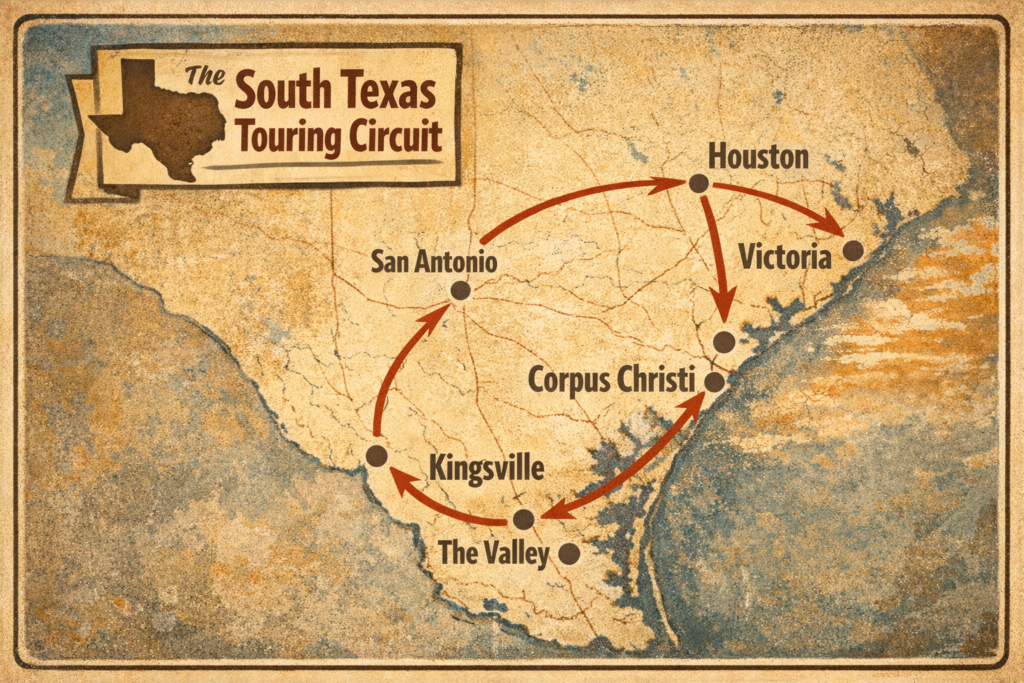
South Texas Touring Circuit map
The South Texas Touring Circuit
Before interstate highways reshaped travel patterns, artists followed regional loops rather than national routes. A typical run might include Houston, Victoria, Corpus Christi, Kingsville, the Valley, Laredo, and San Antonio.
Corpus wasn’t a detour. It was a hub.
Dance halls and live venues created a weekly rhythm where live music was part of everyday life. Working families gathered to dance, socialize, and celebrate community. Musicians could build careers by playing consistently across South Texas, developing loyal audiences show by show.
This ecosystem produced innovation blending Mexican musical traditions, country, blues, and emerging rock influences into sounds that would later define Texas music culture.
Music wasn’t an industry yet. It was infrastructure.
Culture Before Commerce
One of the most fascinating aspects of Corpus Christi’s musical history is that it grew organically. There was no city branding campaign, no coordinated tourism strategy, and no formal declaration of identity.
Music thrived because people valued it.
Radio stations broadcast across borders. Local venues hosted constant performances. Artists experimented freely because audiences were open to discovery. Community participation created cultural gravity long before marketing departments learned how to manufacture it.
In many ways, Corpus embodied what thriving music cities always share: frequency, accessibility, and belonging.
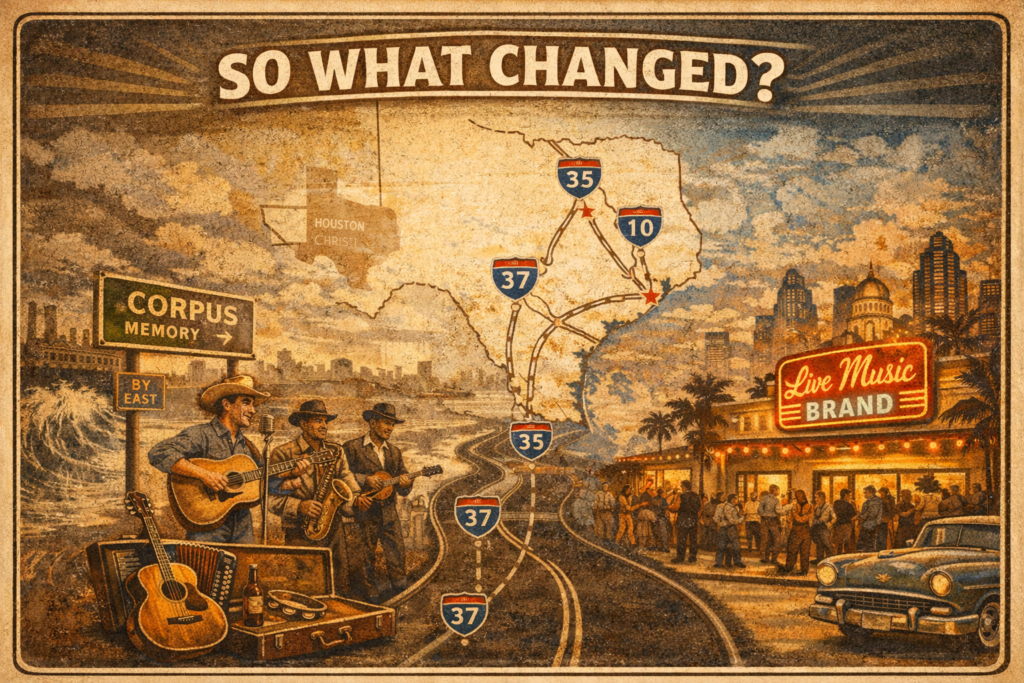
So What Changed?
The decline wasn’t caused by a loss of creativity or talent.
It was infrastructure.
The construction of the Interstate Highway System in the latter half of the 20th century rewired touring logistics across the country. New routes prioritized efficiency between major metropolitan centers like Houston, Austin, Dallas, and San Antonio.
Suddenly, Corpus Christi became a destination rather than a pass-through stop. Touring shifted from regional loops to optimized highway corridors, and cities directly along those routes gained an advantage.
At the same time, Austin made a series of small but powerful policy decisions that encouraged live music density allowing venues to host frequent performances and creating an ecosystem where musicians could play nightly.
Over time, logistics shaped perception. Perception shaped identity.
Austin became the brand. Corpus became the memory.
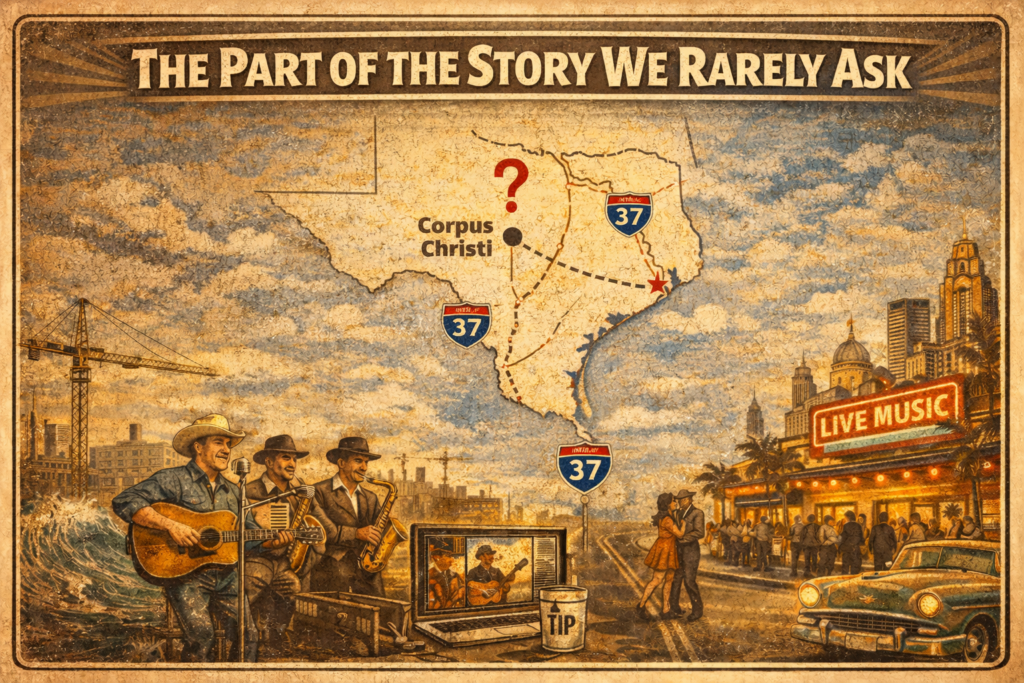
The Part of the Story We Rarely Ask
Here’s the question worth exploring:
If infrastructure once removed Corpus Christi from the touring map… could new infrastructure put it back?
Today, the music industry is changing again.
Streaming has reduced recorded music revenue, pushing artists back toward live performance. Independent musicians are building audiences online before ever stepping into major markets. Mid-size cities are becoming attractive again because audiences are authentic, costs are manageable, and communities are eager for shared experiences.
In many ways, the industry is moving closer to a regional model the same conditions that once allowed Corpus to thrive.
History isn’t repeating itself exactly, but the pattern feels familiar.
The Opportunity Hidden in Plain Sight
A music city is not created by a slogan. It emerges when several small forces align:
Consistent venues where audiences trust the experience
Artists who feel welcomed and supported
Communities that show up regularly
Collaboration between culture and entrepreneurship
A shared belief that something meaningful is happening locally
Corpus Christi already possesses many of these ingredients.
What’s been missing isn’t culture it’s coordination and narrative.
Cities change when people begin to see themselves differently. When residents, artists, business owners, and leaders start asking not “Why isn’t this happening here?” but “What could happen if we built it together?”
Why This Conversation Matters Now
Across the country, smaller cities are rediscovering the economic and cultural power of creative ecosystems. Music scenes drive tourism, entrepreneurship, nightlife, education, and civic pride. They attract young professionals, inspire innovation, and strengthen local identity.
But more importantly, they give communities something harder to measure: momentum.
Corpus Christi stands at an interesting moment in its story. The city has history, talent, and authenticity qualities that cannot be manufactured overnight. The question isn’t whether Corpus can copy another city’s success.
The question is whether it can rediscover its own.
A Different Way to Think About the Future
Maybe Corpus Christi was never officially Texas’ music capital.
But it may have been something just as important — a place where music lived naturally within community life.
And perhaps the real opportunity isn’t reclaiming a title from the past.
It’s recognizing that the same forces that once made Corpus a cultural hub are quietly becoming relevant again.
The future of music may not belong only to the largest cities.
It may belong to places willing to invest in creativity, collaboration, and community — places ready to build scenes instead of waiting for them.
Maybe the better question isn’t whether Corpus Christi was once a hidden music capital.
Maybe it’s whether we’re ready to imagine what it could become next.
Do you often find it hard to record music effectively at home? This guide explains the basics of music recording, setting up your home studio, and choosing the right digital audioworkstation for beginners. Readers will gain practical tips and clear techniques to improve their sound quality and build sustainable music careers. The content targets common issues musicians face, providing straightforward solutions to boost their confidence in producing quality recordings.
Can musicvideo production become straightforward when one has clear guidance? This article outlines essential techniques, including planning methods, technical filming skills, and professional editing practices. Musicians and artists will find actionable steps to transform creative ideas into engaging projects. The blog addresses common challenges such as disorganized project planning and unclear editing strategies, offering practical advice to build profitable careers.
Are you struggling to build a strong connection with your musicaudience? This post presents proven fanbase strategies such as utilizing interactive content and crafting consistent brand messaging. It explains how engaging social media communities and email marketing can drive growth and boost your career. Readers will learn practical methods to overcome the challenge of reaching and retaining fans while turning their passion into a sustainable livelihood.
Titles have the power to shape perception and spark interest. This article provides a variety of title ideas that musicians and creative professionals can directly use or modify to suit their needs. The reader will find simple tips for creating effective titles and learn how to use practical tools for generating new ideas. By addressing the challenge of generating engaging titles, the content offers clear solutions to help overcome creative roadblocks.
Are you looking to build a sustainable career in music while making a lasting impact on the creative economy? This article shows how forward-thinking professionals shape new paths for musicians and artists. Readers learn how technology builds innovation, the role of education in shaping career skills, and how collaborative efforts create steady revenue streams.