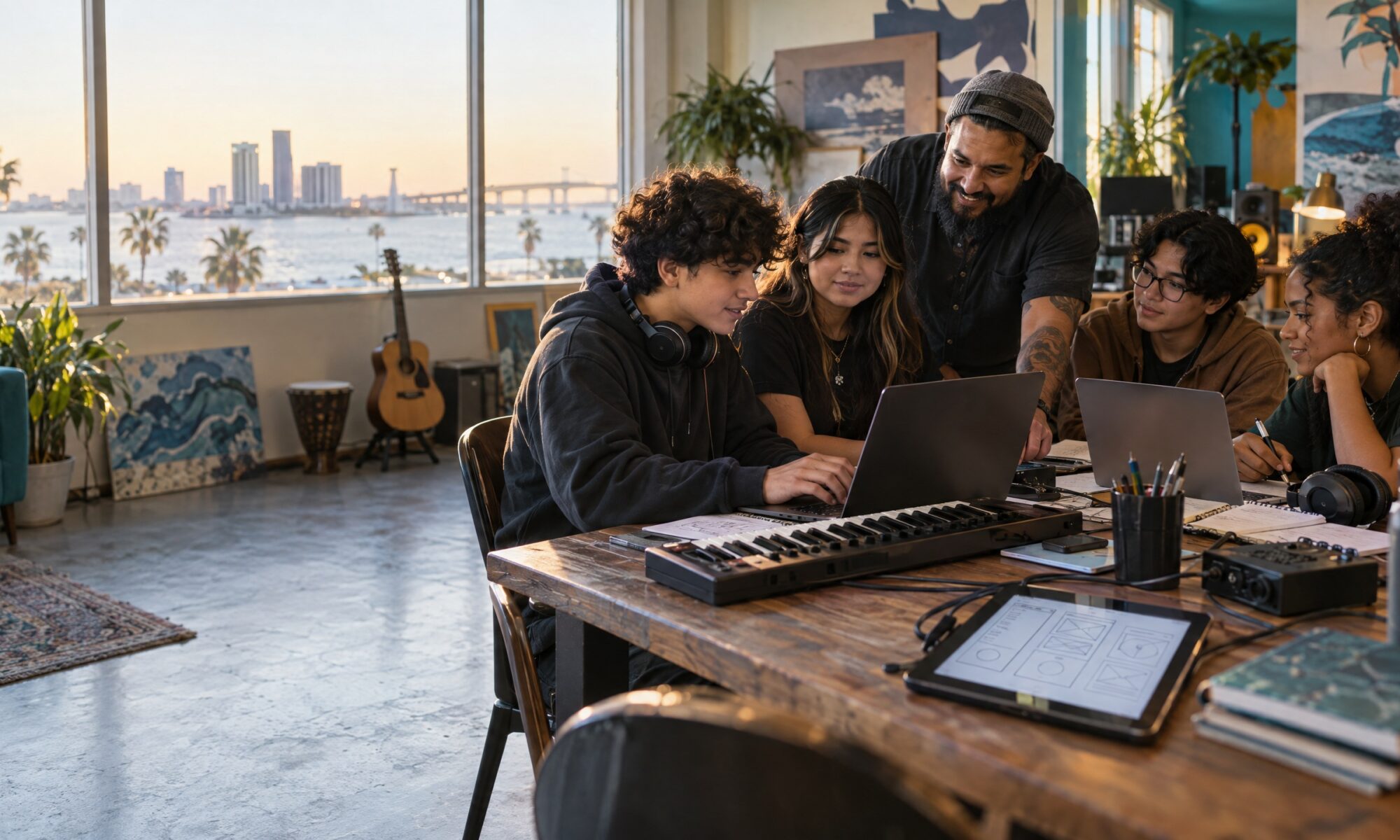
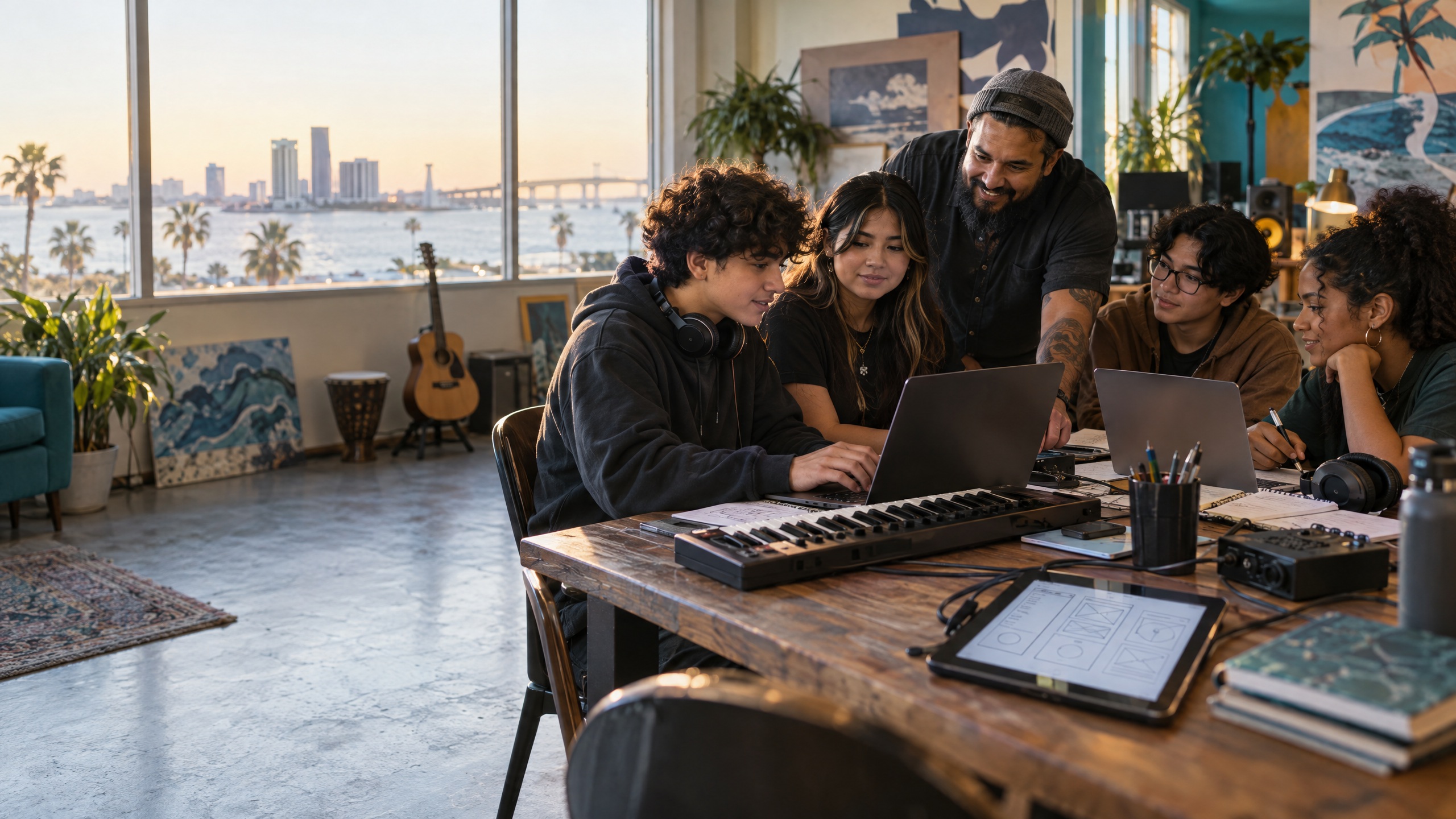
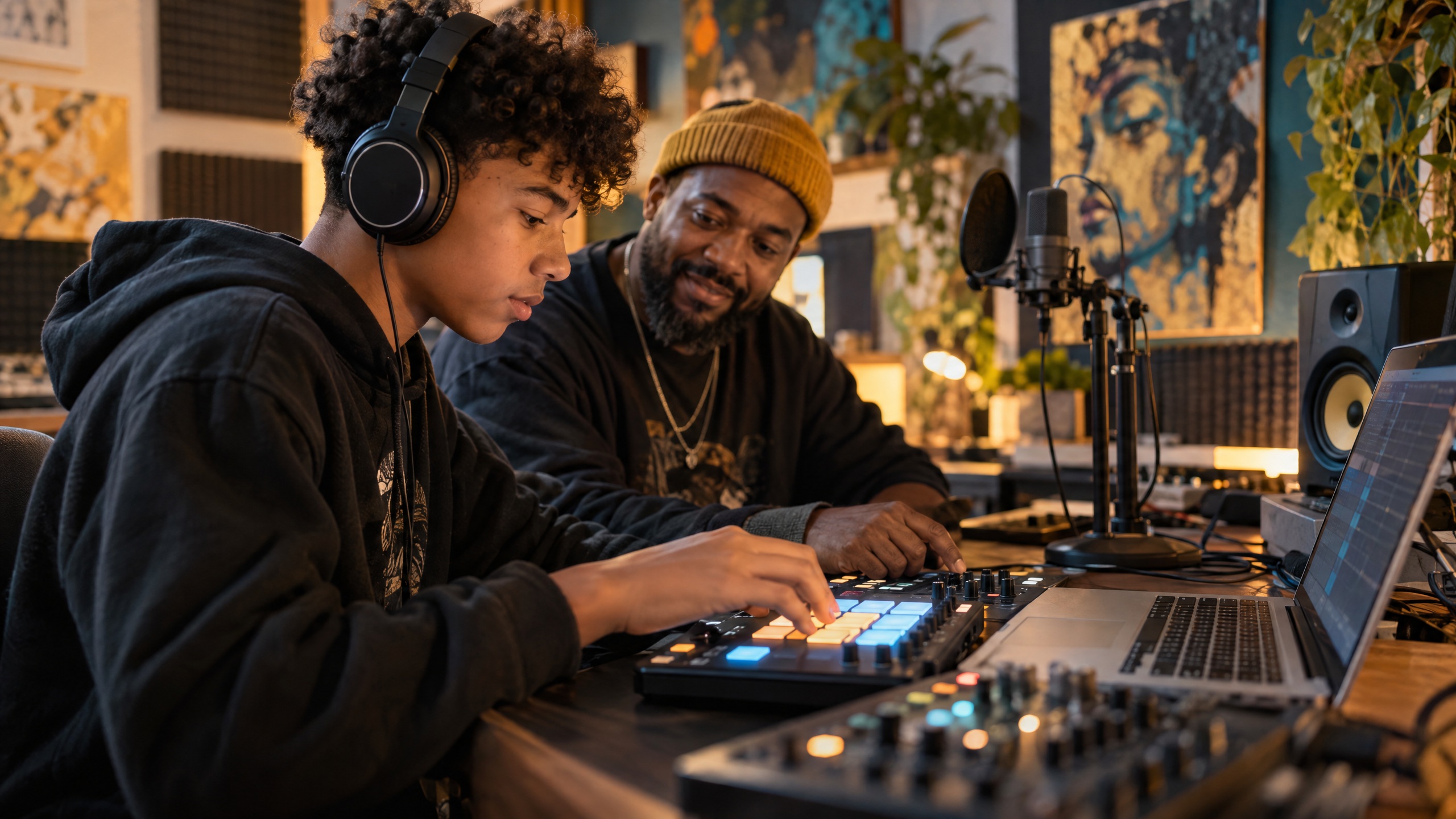
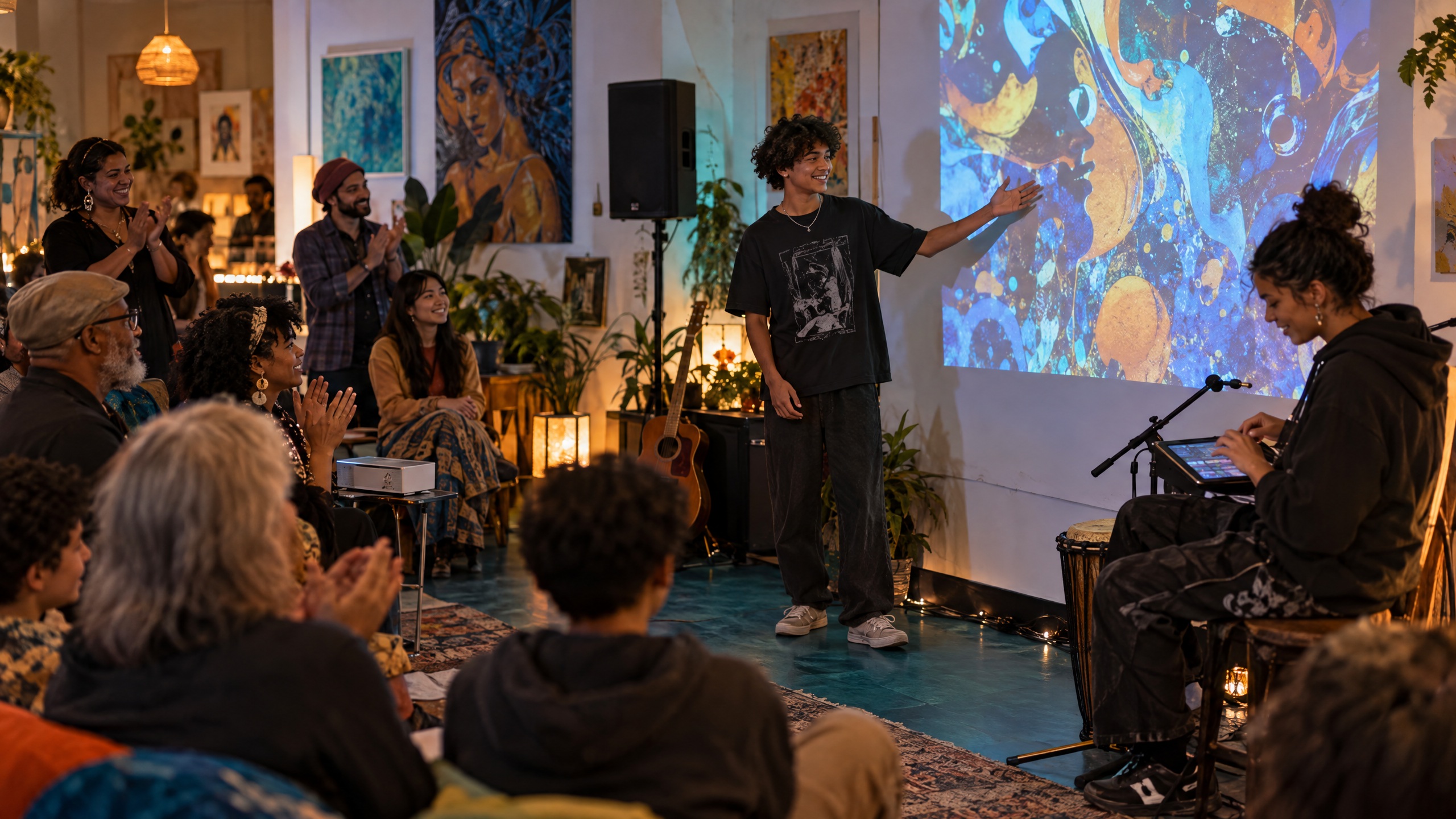
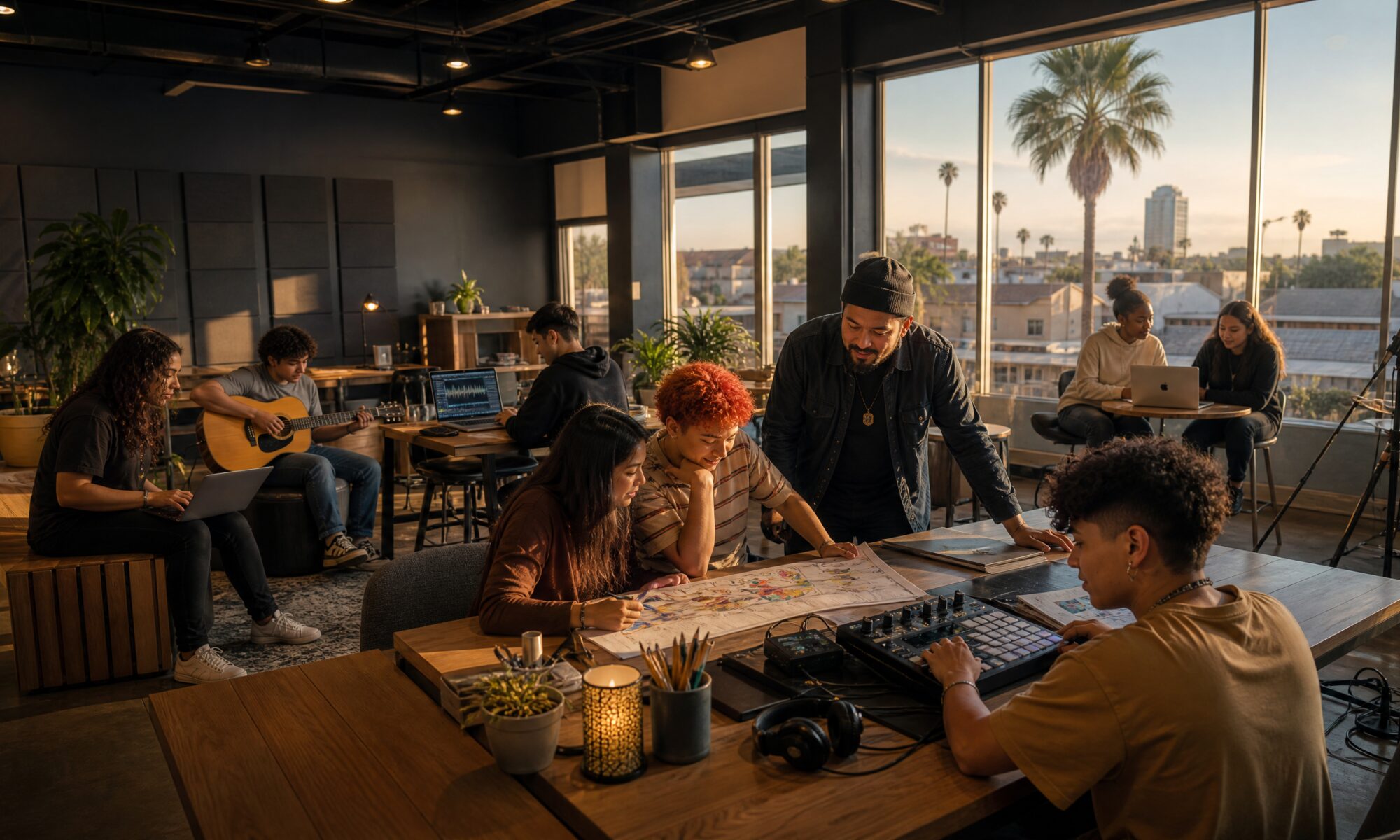
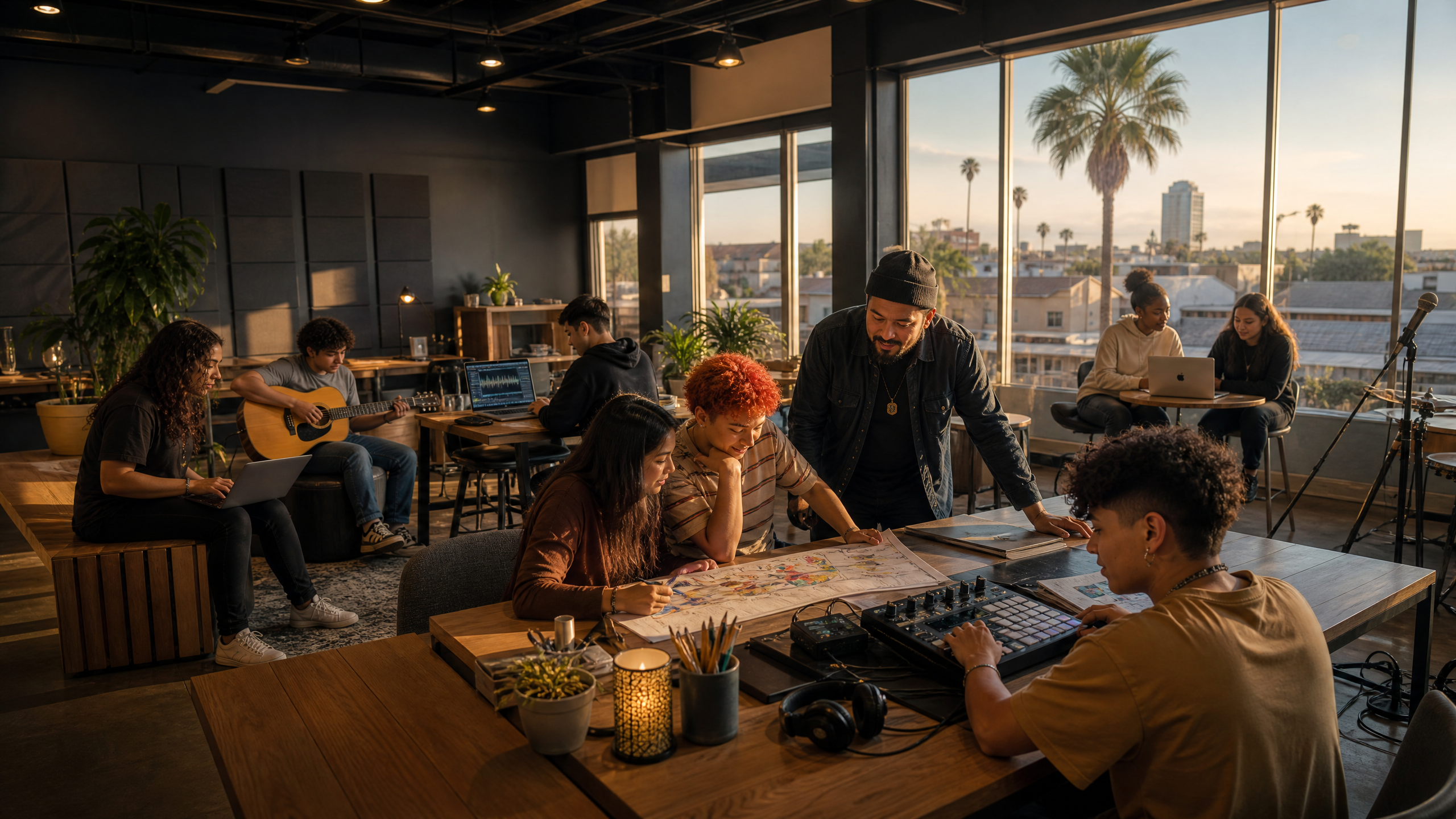
Creative technology helps young people turn ideas into something real.
Young people are already surrounded by technology. They use it to listen to music, watch videos, connect with friends, and discover new ideas. The question is whether they will only consume what technology offers, or have meaningful opportunities to create with it.
Creative technology helps make that second path possible. It brings together imagination and practical skill through tools such as coding, app development, digital media, music production, design, and thoughtful use of artificial intelligence. When young people learn to use these tools, they are not simply learning software. They are learning how to turn an idea into something real.
That matters because youth development is about more than preparing for a future job. It is about helping young people build confidence, relationships, curiosity, and a sense of possibility. Creative technology gives those qualities somewhere to grow.
Technology becomes more meaningful when young people can make with it
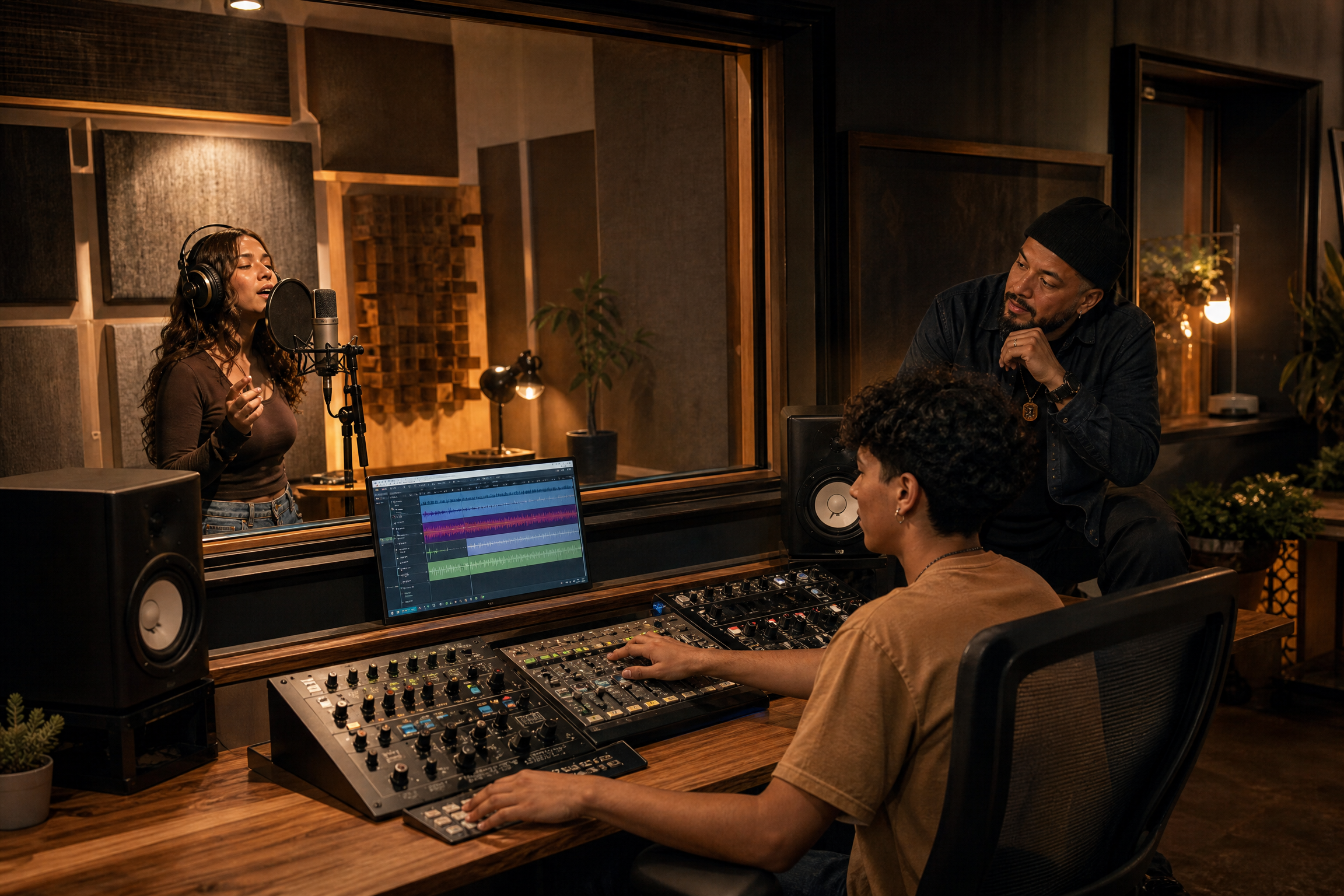
A young person who builds a simple app, records an original song, creates a short film, or designs a digital graphic is practicing more than a technical task. They are making decisions, testing ideas, responding to feedback, and seeing what happens when persistence meets a clear goal.
This kind of hands-on work can make technology feel less distant. Instead of seeing digital tools as something made by other people, young people begin to understand that they can shape the tools, stories, and experiences around them. That shift from consumer to creator is powerful.
Creative youth development brings this perspective together by connecting arts, sciences, humanities, and youth development principles. It centers young people in project-based learning that is relevant to their lives, while giving them space to build communication, critical-thinking, and relationship skills.1
Projects create a practical reason to learn and keep learning.
For a student who does not yet see themselves as a programmer, designer, producer, or entrepreneur, a real project can be the beginning of a new identity. The first completed beat, first working prototype, or first piece of digital art gives them evidence that they can learn, contribute, and grow.
Creativity makes technical learning personal
Technical learning can feel intimidating when it is disconnected from a young person’s interests. It becomes more inviting when it starts with something they care about.
A music lover may want to learn how to record vocals, mix sound, or create artwork for a release. A young storyteller may want to make video content. A student who notices a problem in their neighborhood may want to design an app that helps solve it. These interests create a reason to learn the technical steps behind the work.
The arts also help young people explore who they are and how they want to be seen. Community-based youth arts programs can create spaces for skill-building, self-confidence, belonging, and supportive relationships with peers and adults.2 Technology can strengthen that process when it is used as a creative medium rather than treated as an isolated subject.
This approach does not mean every young person has to become a technology professional. It means every young person deserves the chance to discover what they can do when creative expression and digital tools meet.
Mentors help turn curiosity into confidence
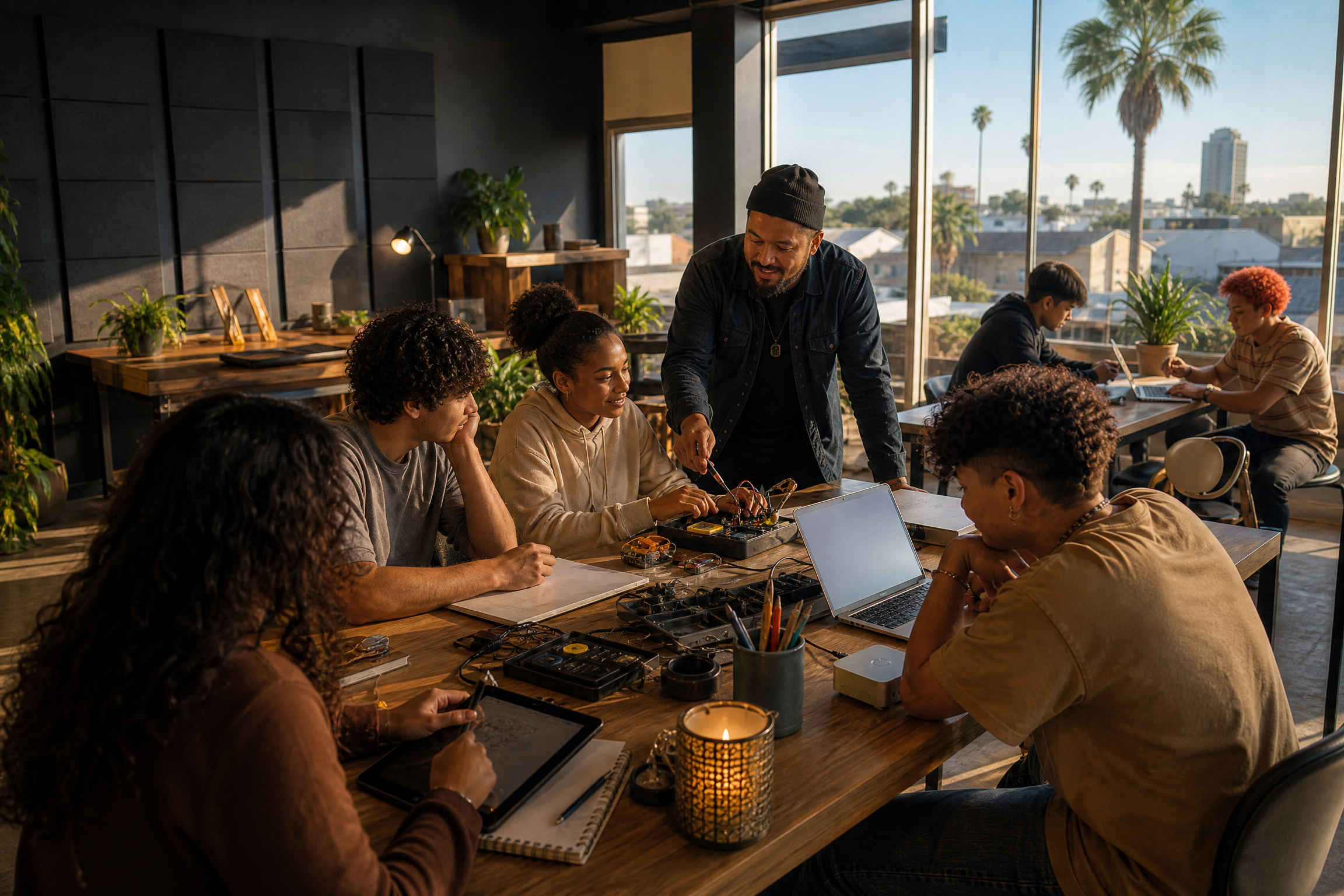
Access to devices matters, but access alone is not enough. Young people benefit when they can ask questions, receive encouragement, and learn alongside people who understand the creative process.
A mentor can show a student how to improve a mix, organize a project, present an idea, or work through a challenge without taking control of the work. That support helps young people see that learning is not about getting everything right the first time. It is about showing up, trying again, and staying connected to the people who want to see them succeed.
Mentorship makes room for questions, practice, and confidence.
Research on digital media and adolescent development also points to the importance of context. Digital experiences can support identity development, peer connection, and autonomy, but the environment around those experiences shapes how young people use and interpret them.3 A welcoming space with trusted adults and peers can make creative technology more purposeful, social, and grounded.
This is why a community learning environment matters. Young people need room to experiment, but they also need people who can help them reflect on what they are making, how they are sharing it, and what it might lead to.
Creative technology builds pathways, not just projects
The strongest creative technology experiences do not end when a workshop is over. They help young people recognize pathways into education, entrepreneurship, creative work, and the technology workforce.
At Raps & Apps, Creative Technology Pathways gives young people accessible, hands-on opportunities to explore coding, app development, digital media, AI and technology platforms, mentorship, and real-world projects. The program connects technical skill-building with creative problem-solving so participants can consider new possibilities for their future.4
Those pathways can look different for every person. One young creator may discover an interest in music production. Another may decide to study design, develop an app idea, or offer digital services as a small business. A third may simply gain the confidence to speak up, collaborate, and pursue an opportunity they once believed was out of reach.
The point is not to prescribe one outcome. The point is to make more outcomes visible.
A future community creative hub can bring people together
Creative technology is most powerful when it lives in community. Young people learn from mentors, artists learn from one another, and families see new possibilities when they can watch local talent grow.
This is part of the future vision for WE CREATE, a Community Creative Hub that will bring artists, youth, mentors, entrepreneurs, and community partners together around shared learning and creative opportunity. It can be a place where someone comes in with a question, a song, a sketch, or an idea and meets people who help them take the next step.
Creative learning becomes stronger when a community gathers around it.
A community hub should not ask young people to leave their interests at the door. It should welcome the music, stories, inventions, designs, and questions they already carry with them. It should help them connect those interests to practical skills, supportive relationships, and real opportunities.
Corpus Christi has young people with ideas worth investing in. Creative technology belongs in youth development because it gives those ideas a way forward. It helps young people make, learn, collaborate, and see themselves as people who can shape their own future.
To learn more about Raps & Apps programs, partnership opportunities, or the vision for WE CREATE, visit rapsandapps.org.
Corpus Christi has no shortage of talent. It lives in the singer rehearsing after work, the young person learning to make beats on a borrowed laptop, the artist sketching between shifts, and the entrepreneur with a business idea that is not quite ready for the world yet. The city is full of people who are making something meaningful. What many of them need is a place where that potential can grow.
That is the vision behind WE CREATE, a Community Creative Hub. WE CREATE is a shared home for young people, artists, and creative entrepreneurs to learn, create, collaborate, and move from talent to opportunity. It is a space where a musician can meet a mentor, where a student can learn the first steps of coding, where an artist can develop a portfolio, and where a small creative business can find guidance, tools, and community.
Raps & Apps has always believed that creativity deserves more than applause. Artists need platforms, practical resources, and relationships that help them build sustainable futures. The Golden Mic was created to give Corpus Christi musicians a place to be heard, seen, and supported as they grow their craft. Creative Technology Pathways gives young people hands on opportunities to explore coding, app development, digital media, artificial intelligence, and other tools that shape how people communicate, make, and work. WE CREATE brings those pathways together in one connected community hub.
A creative city needs places to create
Creative work does not happen in a vacuum. It happens when people have access to a safe room, a reliable internet connection, equipment, instruction, peers, and the confidence to keep going. Yet many emerging artists and young people have limited access to those essentials. They may have ideas, but no recording space. They may have talent, but no mentor. They may be interested in technology, but no place to try it without feeling out of place.
WE CREATE can change that equation. It creates an environment where curiosity is welcome and where learning by doing is part of the culture. Someone can arrive with a song idea, a design concept, a business question, or an interest in technology. They can leave with new skills, new connections, and a clearer sense of what comes next.
This is especially important for young people. Early exposure to creative and technical learning can help them recognize possibilities that may otherwise feel distant. When a young person sees a local artist produce a song, build a website, plan an event, or run a small business, those careers become real. The message is simple: people from this community can build meaningful work from their ideas.
WE CREATE is more than a building. It is a Community Creative Hub where creative potential can become practical opportunity.
One space, many pathways
WE CREATE is designed to support different forms of creativity without separating them into isolated worlds. Music, media, technology, entrepreneurship, wellness, and community building all have something to offer one another. A young producer may learn graphic design for album art. A coder may help create a tool for local artists. A vocalist may gain confidence through performance. An entrepreneur may find the collaborators needed to move an idea forward.
Music and media creation
At WE CREATE, artists can record, rehearse, produce content, and develop original work. This gives them space to practice their craft and share their voice.
Creative technology learning
Participants can explore coding, app development, digital media, and artificial intelligence tools. This connects curiosity with useful, modern skills.
Mentorship and consulting
Artists, producers, educators, and business guides can help participants turn questions into practical next steps.
Entrepreneurship support
Creators can develop a portfolio, refine an idea, understand audiences, and build income strategies. This supports creative work as a sustainable career path.
Community gathering
Workshops, showcases, listening sessions, and collaborative events can connect people across age groups, disciplines, and neighborhoods.
The strength of a shared hub is that it creates momentum. When people can see each other working, they begin to imagine what is possible for themselves. An informal conversation can turn into a project. A workshop can turn into a new interest. A first performance can turn into the beginning of an artistic career.
A home for the work already happening
WE CREATE does not start from zero. It builds on the work, relationships, and creative energy already present in Corpus Christi. Raps & Apps is helping local musicians gain visibility through The Golden Mic while giving youth access to creative technology learning through Creative Technology Pathways. Arts for At Risk Youth creates opportunities for local female artists to connect with young female patients through creative expression, encouragement, and positive role modeling.
WE CREATE can become a more permanent home for this kind of work. It can make it easier to host workshops, create content, welcome mentors, organize community events, and connect participants to the next opportunity. Rather than asking people to find scattered resources across the city, WE CREATE can become a recognizable place to begin.
WE CREATE combines a Community Creative Hub with creative business incubation, production, agency services, and consulting support. As a nonprofit partner, Raps & Apps can help ensure that the benefits of this space reach artists, youth, and the wider community. Together, this ecosystem can help creators move from early ideas toward stronger skills, professional relationships, and income generating opportunities.
Building confidence, connection, and local opportunity
The impact of WE CREATE is not limited to the people who use its rooms. When artists have places to work and grow, they contribute to a more active cultural life. When young people gain skills and confidence, they are better prepared to pursue education, employment, entrepreneurship, and leadership. When local audiences have more opportunities to experience original work, they become part of a stronger creative economy.
WE CREATE can also create a sense of belonging. Creative people often need more than equipment. They need to know that their work matters and that there are people who understand the challenges of starting out. A welcoming hub can offer that encouragement. It can make room for people at different stages, from the young person trying a new tool for the first time to the artist preparing a professional release.
Corpus Christi deserves places that make room for ambition. It deserves spaces where creativity is treated as a strength, where technology is approachable, and where young people can picture a future built from their own ideas. WE CREATE is an investment in that future.
Help create the next chapter
A vision like this becomes real through community participation. Artists, educators, mentors, businesses, funders, neighbors, and supporters all have a role to play. Some people may share skills. Some may offer resources. Some may attend events, recommend a young person, or help spread the word. Every connection can help widen the path for someone who is ready to create.
WE CREATE will be a place to make music, explore technology, build confidence, launch ideas, and strengthen community. More importantly, it will remind Corpus Christi creators that they do not have to build alone.
To learn more, partner with Raps & Apps, or support the work, visit rapsandapps.org.
There is a version of Corpus Christi that most people outside of Texas have never seen.
It is not the version in the travel brochures — the beach access roads and the tourist-facing waterfront. It is the version that exists at 11 PM on a Tuesday at Brewster Street Ice House, when a guitarist from the Northside is playing something that sounds like it was born in a delta but raised on the coast. It is the version that lives in the rehearsal spaces and the back rooms and the garages where musicians who have never left this city are making music that deserves to be heard by the world.
That version of Corpus Christi is real. It has always been real. The question is whether the city is ready to build around it.
What a Music Destination Actually Is
When people talk about music cities — Austin, Nashville, New Orleans, Memphis — they are not just talking about venues. They are talking about ecosystems. A music destination is a place where the infrastructure of music is so deeply embedded in the identity of the city that it becomes a reason to visit, a reason to stay, and a reason to build a career.
That infrastructure includes live music venues that are open seven nights a week. It includes recording studios that attract artists from outside the region. It includes music festivals that put the city on a national calendar. It includes music education pipelines that develop the next generation of talent. And it includes a local audience that shows up — not just for the big names, but for the locals who are still figuring it out.
Corpus Christi has pieces of all of this. What it has not yet done is connect them.
The Geography Is an Asset
Corpus Christi sits on the Gulf of Mexico at the mouth of the Coastal Bend — a stretch of South Texas coastline that is unlike anywhere else in the country. The water, the wind, the flatness of the land, the way the sky opens up over the bay — all of it creates a sensory environment that has always influenced the music made here.
The Tejano tradition runs deep in this region. So does the blues. So does country, rock, hip-hop, and a growing wave of experimental artists who are blending all of it into something that has no clean genre label. The coastal geography is not just a backdrop. It is a creative force. It shapes the pace of the music, the weight of the lyrics, and the emotional register of the performances.
Cities like Galveston and Key West have built significant music tourism economies around far less musical heritage than Corpus Christi possesses. The difference is not talent. The difference is intention.
What the Scene Already Has
The artists are here. Walk into any open mic night in Corpus Christi and you will find musicians who have been playing for decades — people who chose to stay in this city because they love it, not because they ran out of options. The Golden Mic Season 1 alone introduced fifteen artists and bands who represent a range of genres, generations, and backgrounds that would be the envy of cities twice the size of Corpus Christi.
The venues are here. Brewster Street Ice House, House of Rock, Concrete Street Amphitheater — these are not placeholder spaces. They are anchor venues with histories, with loyal audiences, and with the infrastructure to support serious live music programming.
The culture is here. Corpus Christi has a deep relationship with music that goes back generations. The Tejano Music Awards were born in San Antonio but the culture that feeds them runs through the Coastal Bend. The legacy of artists like Selena — who grew up in Lake Jackson but built her career in Corpus Christi — is a reminder that this region has produced world-class talent before and will again.
What the scene lacks is not raw material. It lacks coordination, investment, and a shared narrative about what Corpus Christi can become.
The Vision
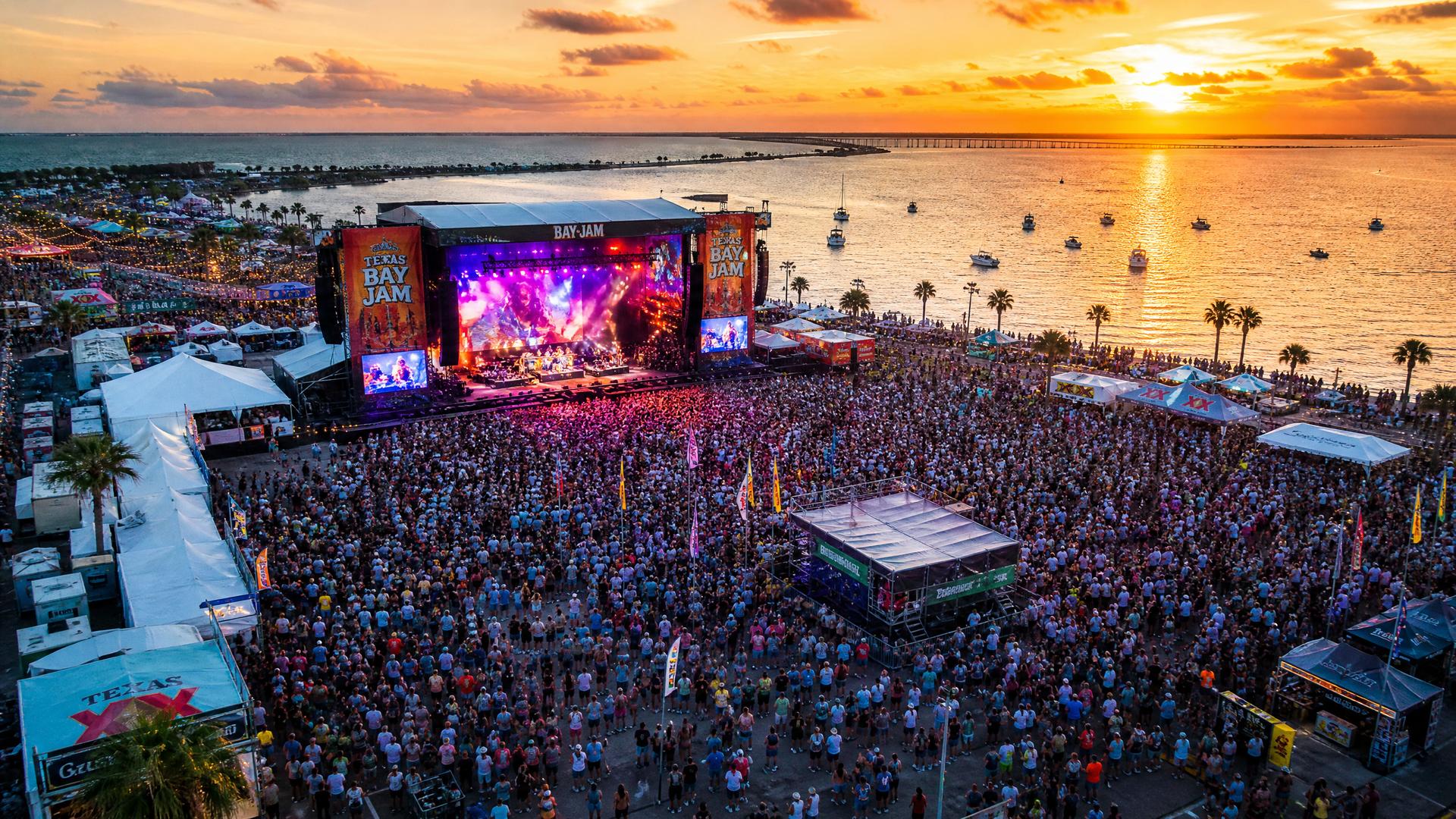
Imagine a Corpus Christi where the Seawall is not just a place to watch the sunset but a place to hear live music every weekend from Memorial Day through Labor Day. Where the downtown arts district has a music venue on every other block. Where a music festival on the bay draws visitors from Houston, San Antonio, and Dallas the way South by Southwest once drew visitors from across the country.
Imagine a city where young musicians growing up in the Northside or on the Island have a clear pathway — from music education programs in schools, to youth performance stages, to professional development resources, to recording infrastructure, to festival slots, to national touring opportunities. Where staying in Corpus Christi is not a compromise but a competitive advantage.
Imagine a city where the story of the music scene is told loudly and consistently — where the artists are celebrated, where the venues are supported, where the culture is treated as an economic engine rather than an afterthought.
That city is not a fantasy. It is a choice.
The Role of Organizations Like Raps & Apps
Building a music destination requires more than talent and geography. It requires organizations that are willing to do the unglamorous work of infrastructure — the grant writing, the youth programming, the community building, the documentation, the storytelling.
Raps & Apps exists at that intersection. Through programs like The Golden Mic, we are documenting the artists who are already here and building the audience that will sustain them. Through Creative Technology Pathways, we are developing the next generation of musicians, producers, and digital creators who will carry this scene forward. Through the Community Creative Hub — the physical space we are building in Corpus Christi — we are creating the infrastructure that a music destination requires: a place where artists can create, collaborate, and launch.
None of this happens overnight. But all of it starts with a decision to take the music seriously. To treat the artists as assets. To invest in the scene the way other cities have invested in theirs — and to do it before someone else tells the story of Corpus Christi’s music culture for us.
The Moment Is Now
Every music city has a moment when the scene tips from local secret to national story. Austin had it in the 1970s. Nashville had it in the 1990s. New Orleans has been having it continuously for two centuries because the city never stopped believing in its own music.
Corpus Christi is at that moment right now. The talent is here. The geography is here. The culture is here. The only thing missing is the collective will to build around it — to invest in the venues, support the artists, develop the infrastructure, and tell the story loudly enough that the rest of the world starts paying attention.
The Coastal Bend has always made music worth hearing. It is time to make it a destination worth visiting.
Every thriving music city has them. You know the places. The rooms where the floor is a little sticky, the sound system is dialed in just right, and the calendar is packed with both touring acts and local openers. They are the heartbeat of a local music ecosystem. They are anchor venues.
But what exactly makes a room an anchor venue? And why is the survival of these specific stages so critical to the future of Corpus Christi’s music scene?
Defining the Anchor Venue
An anchor venue is not just a bar that happens to have a corner stage. It is not a restaurant that pays a guy to play acoustic covers in the background while people eat dinner.
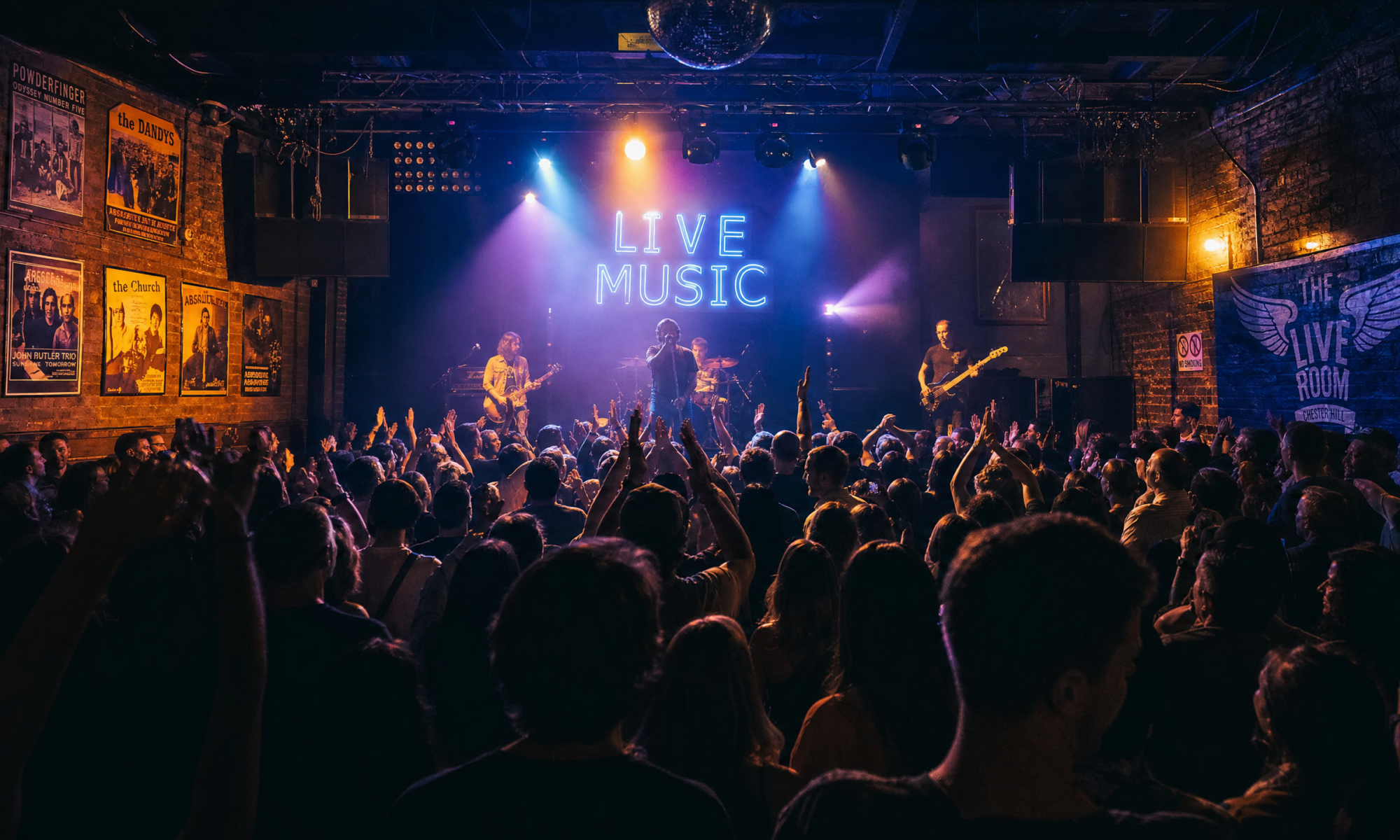
An anchor venue is an independent, purpose-built room where the primary commodity is the live music experience. It is a space designed to connect artists with audiences. In mid-size cities like Corpus Christi, these venues serve as the central nervous system of the local arts economy.
They are called anchors because they hold the scene in place. They provide the necessary infrastructure for local bands to cut their teeth, build a following, and learn how to command a real stage. They also serve as the critical routing stops for regional and national touring acts passing through South Texas. Without anchor venues, the touring circuit bypasses the city entirely, and local artists have nowhere to graduate to after outgrowing the garage.
The Corpus Christi Anchors
If you want to understand what an anchor venue looks like in practice, you only have to look at the institutions that have kept Corpus Christi’s music pulse beating for decades.
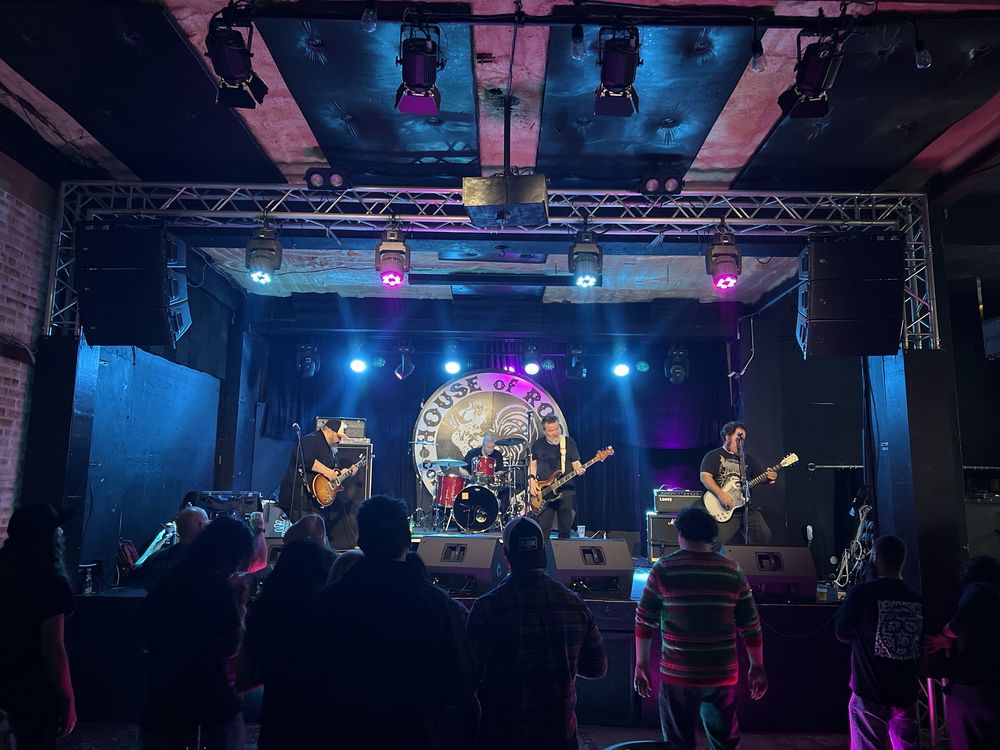
House of Rock
Take House of Rock. For nearly twenty years, this downtown staple has been the definitive anchor for the Coastal Bend’s rock, punk, metal, and alternative scenes. It is a sanctuary for music lovers. It is the room where local bands get their first real taste of professional sound and lighting, opening for the very touring acts they grew up listening to. It is a venue that maintains its gritty, high-energy atmosphere whether it is hosting a massive national tour or a local album release party.
House of Rock has anchored the Coastal Bend rock and alternative scene for nearly two decades.
Executive Surf Club
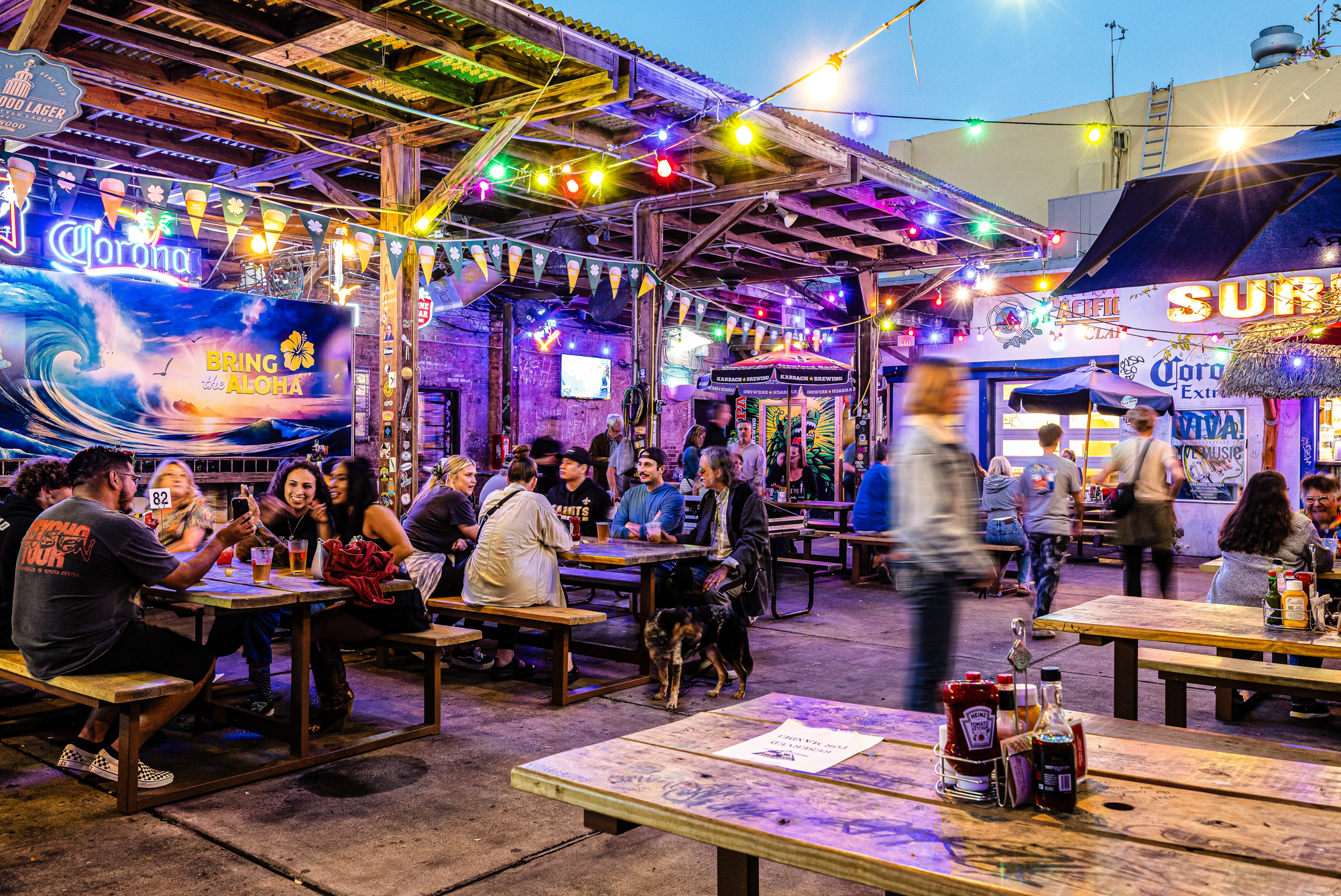
Then there is the Executive Surf Club. Since 1990, it has been the premier outdoor stage in the heart of downtown. From 60s surf guitar legends to punk rock icons, the Surf Club has hosted them all. More importantly, it has consistently provided a platform for local talent to play in front of large, diverse crowds right in the center of the city’s nightlife district. There is something about that open-air patio under the string lights that makes every show feel like a Corpus Christi original.
The Executive Surf Club’s open-air stage has been a downtown institution since 1990.
The Exchange
And we cannot talk about Corpus Christi anchors without talking about The Exchange. Open since 2017, this venue has rapidly become the beating heart of the modern local scene. It is affectionately known by its regulars and musicians as the home of “The Jamily.” They support local music like no other venue in town, cultivating an environment where artists actively collaborate and elevate one another.
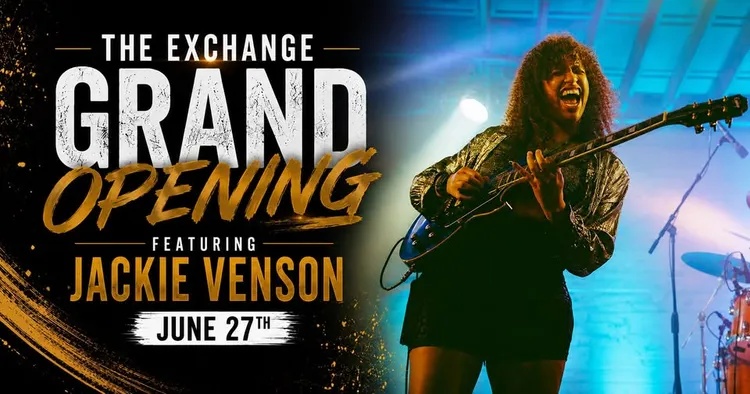
But they also punch above their weight. The Exchange has brought in national touring acts like Jackie Venson to provide a uniquely intimate, up-close experience that benefits both the touring artists and the local scene alike. When a nationally recognized artist chooses a room like The Exchange over a larger stage, it says everything about what this venue has built.
The Exchange opened its doors in 2017 and quickly became the home of Corpus Christi’s “Jamily” — a tight-knit community of artists and music lovers.
These venues do more than sell tickets and pour drinks. They cultivate culture. They are the rooms where scenes are born, where bands are formed in the crowd, and where the community gathers to celebrate its own.
The Economic Engine of the Scene
The importance of anchor venues goes far beyond the music itself. They are massive economic drivers for the city.
When an anchor venue hosts a show, the economic impact ripples outward. Audiences buy tickets, yes. But they also pay for parking. They eat dinner at restaurants down the street before the doors open. They grab drinks at neighboring bars after the encore. They book hotel rooms if they are driving in from out of town.
According to recent studies on independent music venues, stages across the country generate billions in wages and benefits, money that goes directly back into the local economy as rent, groceries, and life expenses for bartenders, sound engineers, booking agents, and the artists themselves. Anchor venues are the engines of urban renaissance. They turn quiet downtown streets into vibrant cultural districts.
Why We Must Protect Them
When a city loses an anchor venue, it doesn’t just lose a building. It loses a crucial rung on the ladder of artist development.
Without mid-size, independent rooms, the gap between playing a coffee shop corner and playing a massive arena becomes unbridgeable. Local artists lose the spaces where they can safely experiment, fail, grow, and eventually thrive. The scene stagnates.
This is why supporting Corpus Christi’s anchor venues is not just about having a good time on a Friday night. It is about investing in the cultural infrastructure of the city. It is about ensuring that the next generation of Coastal Bend musicians has a stage to stand on.
Buy the ticket. Tip the bartender. Buy the merch. Show up for the local opener.
The health of Corpus Christi’s music scene depends on the strength of its anchors. Let’s make sure they hold fast.
The Corpus Christi music scene is a tight-knit family. It is a community built on late nights, shared stages, and an unspoken understanding that the music played here matters. On March 25, 2026, that family lost one of its most vital, vibrant members. Richard Lockhart, a profound guitarist, songwriter, and the driving force behind the Rich Lockhart Band, passed away at the age of 37.
Rich was more than just a musician on a stage. He was an anchor in the Coastal Bend music community, an absolute masterful player, and above all, a devoted father and friend. This is a tribute to a man who played with the soul of Jimi Hendrix, loved with the heart of a brother, and left an indelible mark on South Texas.
The Making of a Musician
Born in Albuquerque, New Mexico, in 1988, Rich’s path to the stage was anything but conventional. He was a gifted athlete in high school, playing football and running track, before earning a collegiate football scholarship in Southern California. But fate intervened early on. His mother purchased a guitar when he had actually asked for a bass, and that small twist of fate sparked a lifelong devotion to the instrument.
When injuries cut his athletic career short, Rich returned to the Coastal Bend and found his true calling. He immersed himself in the local music scene, bringing a sound that blended rock, blues, soul, and reggae. He shared stages with legends like Ted Nugent, REO Speedwagon, and Robert Earl Keen, but his heart always belonged to the local stages of Corpus Christi, from Brewster Street Icehouse to The Exchange.
“You Couldn’t Mess With Us When We Were On Stage”
The Rich Lockhart Band was not just a group of musicians. It was a brotherhood. Formed through serendipitous meetings at local jam nights, the band became a staple of the Coastal Bend. Their sound was raw, unfiltered, and honest. Influenced heavily by Jimi Hendrix, Stevie Ray Vaughan, Muddy Waters, and Ray Charles, the band was known for performances that were nothing short of transcendent.
“We initially became aware of each other’s musicianship and became boys after hearing each other play here at The Exchange on a jam night. Once we jammed together, it was like a lightning bolt went off.”
Rich’s approach to leading the band was rooted in collaboration rather than dictation. If he had an idea, he would bring it to the group and ask, ‘What can you do with it?’ It was this organic, ego-free approach that allowed the band to operate as a cohesive, fiercely loyal unit. There were nights when the entire band would close their eyes on stage, let the music flow, and open them to find the audience completely dumbfounded.
“People in the audience would literally be dumbfounded, especially by Rich’s solos. It’s just like they got hit by a tidal wave and didn’t really know how to react. And then, they would applaud after they were able to take in what happened.”
The Man Behind the Guitar
For all his talent on the fretboard, those who knew Rich best remember the man he was off the stage. He was described by his friends as a blend between Captain Jack Sparrow, an absolute jokester, a prankster, and a brother who would fiercely have your back. But his most defining characteristic was his love for his family, particularly his children, Brooklynn and Gabriel.
“His number one priority besides music was his family. He was a badass family man.”
Rich also possessed a unique warmth that made everyone around him feel seen. He frequently hosted open jams across the city, inviting fellow musicians up on stage and helping future Corpus Christi artists get their start. He was humble, honest, and completely devoid of ego. Everybody in the Coastal Bend music community knew who Rich Lockhart was, and there was no one who did not have a story about his generosity and his spirit.
“I think what made people connect with him so deeply is his loving nature. He had an ability to bring the best out in you and make you feel like you’re the only person in the room.”
The Music Continues
The loss of Rich Lockhart leaves a massive void in the Coastal Bend. But his bandmates are determined to ensure his legacy endures. They speak of an intense responsibility to carry Rich’s heart and soul with them moving forward, not only musically, but in the kind of people they choose to be.
“Rich would be super pissed if I just quit. The importance of being able to express ourselves musically has definitely grown exponentially.”
The band plans to keep working, carrying Rich’s heart and soul with them moving forward. They hope fans remember the passion, the hard work, and the sheer magic of the music they created together. For those grieving, the band offered a message of endurance.
“Continue to press forward, to honor those you have here and your good ones gone. Be constantly grateful for your time on this earth.”
Rich Lockhart was a badass. He was a father. He was a brother. And he was a Corpus Christi music icon. As his bandmate so perfectly put it:
‘Rich, I’ll see you soon. And we’re going to keep rocking in the meantime.’
If you want to support local music in the Coastal Bend please consider donating to fund the next season of The Golden Mic.
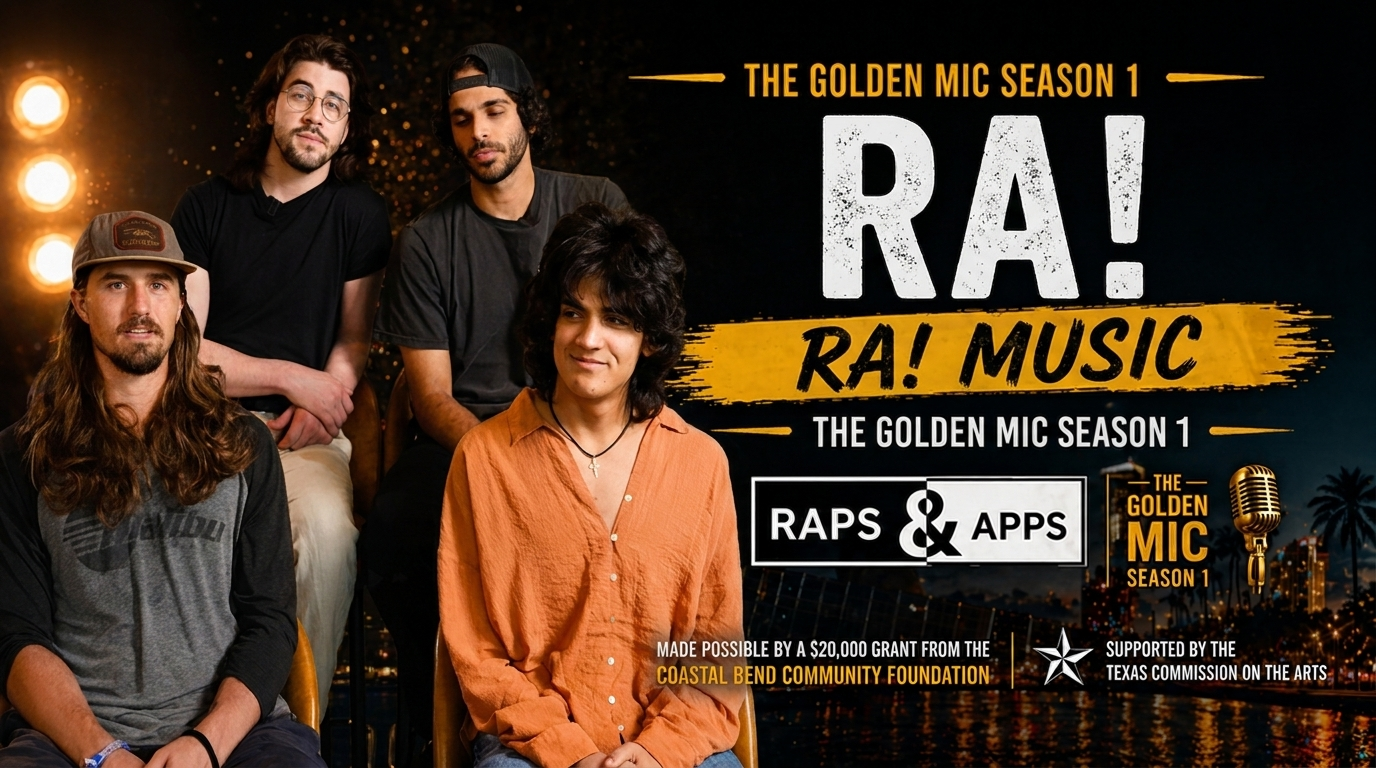
Not because they’re trying to look cool. Not because they fit neatly into one genre or aesthetic. And definitely not because they’re chasing whatever trend is blowing up online this week.
What makes RA! stand out is simpler than that.
They make music that feels alive.
The kind of music that reminds you what it’s like to be young, hopeful, emotional, uncertain, inspired, and fully present all at the same time. Their sound carries movement in it not just musically, but emotionally. Listening to them feels less like consuming content and more like stepping into a moment.
And right now, moments like that matter.
A Revolt Against Numbness
We live in a world overloaded with distractions.
Constant scrolling. Constant noise. Constant pressure to perform instead of connect.
Somewhere along the way, a lot of music stopped feeling human. It became optimized instead of lived-in. Manufactured instead of experienced.
RA! pushes against that.
Their presence feels like a rebellion against emotional numbness a reminder that music is still supposed to make you feel something. Whether it’s freedom, nostalgia, excitement, longing, or just the simple feeling of being understood for a few minutes, RA! taps into something genuine.
You can hear it in their sound. You can see it in the way they interact. You can feel it in the chemistry between them.
Nothing about it feels forced.
The Energy of a New Generation
What makes RA! exciting is that they represent something bigger than themselves.
They’re part of a new generation of artists coming out of Corpus Christi who are redefining what the city’s music scene can become. Artists who grew up online but still crave real-world connection. Artists who care about atmosphere as much as technical perfection. Artists who understand that community matters just as much as streams and followers.
RA! Music carries that spirit naturally.
There’s a looseness to the band that works in their favor. They don’t feel boxed in creatively. One moment the energy feels dreamy and reflective, the next it feels explosive and youthful. Their music mirrors the emotional unpredictability of growing up and trying to figure yourself out in real time.
That’s why younger audiences connect with them.
It doesn’t feel polished into lifelessness. It feels real.
Corpus Christi’s Creative Scene Is Rising
For years, Corpus Christi has had incredible talent hiding beneath the surface.
What’s changing now is visibility.
Organizations like Raps & Apps are helping create platforms that shine a light on artists who deserve larger audiences while also building infrastructure that helps creatives turn passion into sustainable careers. Through initiatives like The Golden Mic Season 1, local artists are finally getting opportunities to tell their stories, showcase their music, and build momentum around their work.
RA! Music feels like one of those artists arriving at exactly the right moment.
They represent the creative pulse of a younger generation that refuses to stay boxed in or overlooked. The kind of artists who could have come from Austin, Los Angeles, or Brooklyn — but instead are building something right here in the Coastal Bend.
And that matters.
Because scenes grow when artists believe they can grow where they are.
The Beginning of Something
Watching RA!, you get the sense that this is still the early chapter.
There’s hunger there. Curiosity. Ambition. A desire to create something meaningful together.
And honestly, that’s one of the most exciting things about them.
They haven’t lost the spark.
Their music feels driven by passion instead of pressure. By friendship instead of branding. By emotion instead of strategy.
That’s rare.
If you want to support local music in the Coastal Bend please consider donating to fund the next season of The Golden Mic.