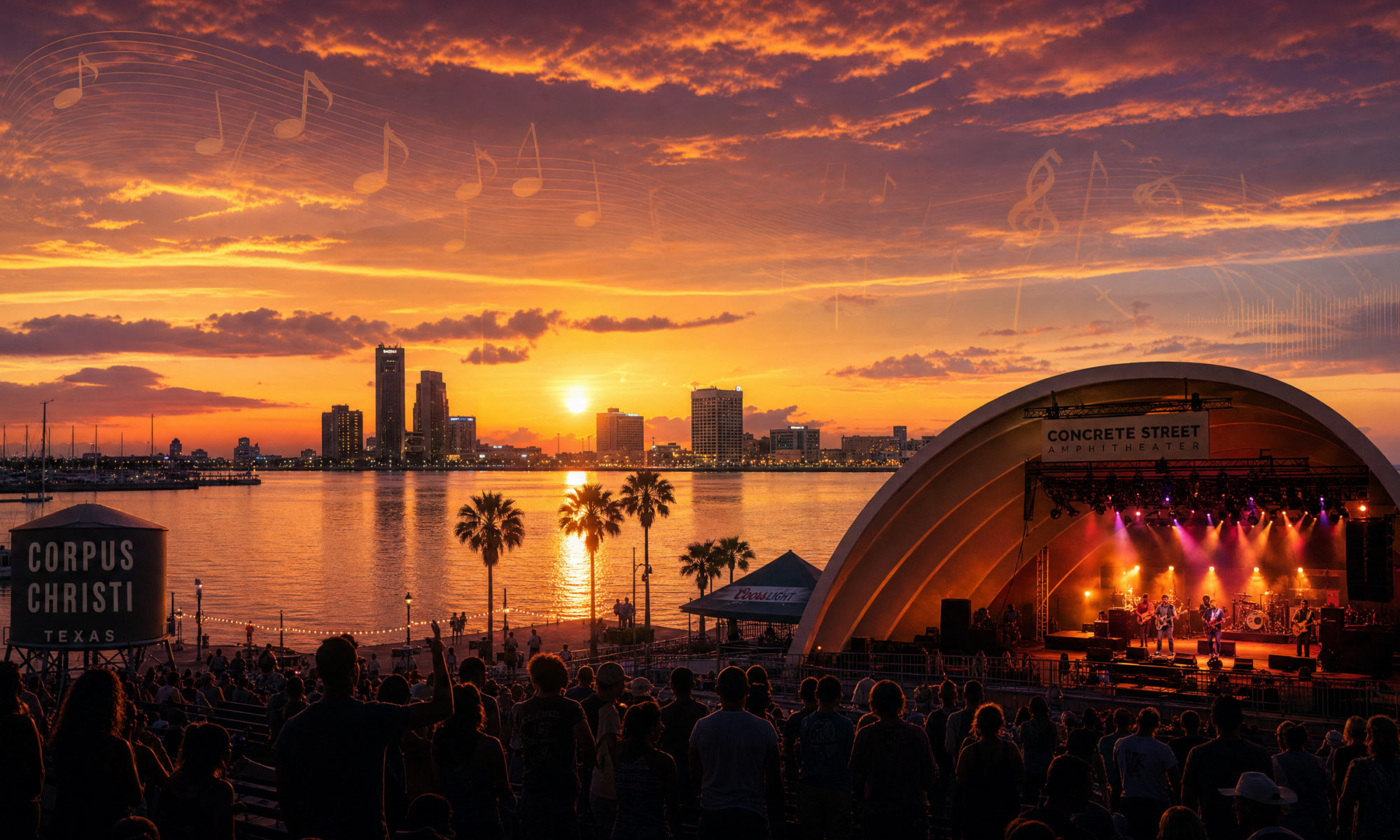
When music lovers talk about the Texas soundscape, the conversation usually gravitates toward a familiar triad. Austin proudly waves its “Live Music Capital of the World” banner. Houston boasts a legendary hip-hop legacy. San Antonio holds deep roots in heavy metal and traditional Mexican genres. Yet, quietly positioned on the Gulf Coast, Corpus Christi is orchestrating a cultural resurgence that demands attention.
Once a thriving hub for touring rock acts and the undisputed capital of Tejano music, Corpus Christi experienced a quiet period in recent decades. However, a combination of grassroots passion, strategic city investments, and a new generation of genre-defying artists is setting the stage for a major comeback. Today, Corpus Christi is uniquely positioned to revive its status as a premier Texas music city.
A Legacy Etched in the Coastal Bend
To understand where Corpus Christi is going, one must look at where it has been. The city’s musical heritage is rich and diverse, serving as a crucial incubator for sounds that shaped the broader Texas identity.
Most famously, Corpus Christi is the birthplace of Selena Quintanilla, the Queen of Tejano music. Her meteoric rise in the 1980s and 1990s brought international attention to the city and cemented its reputation as the cultural epicenter of the Tejano genre [1]. The city also hosted the iconic Johnny Canales Show, a television program that served as a vital launchpad for countless Latin artists [2].
Beyond Tejano, Corpus Christi has a surprisingly deep history in other genres. In the 1970s and 1980s, the city was a major stop for touring rock and metal bands, filling venues like the Memorial Coliseum and the historic Ritz Theatre [3]. Furthermore, the city is home to the Texas Jazz Festival, which began in 1959 as a small campus concert at Del Mar College and has grown into the longest-running free jazz festival in the country [4].
The Modern Resurgence: Venues and Voices
While the massive touring acts of the 90s may have shifted their routes to the “Texas Triangle” of Dallas, Austin, and Houston, Corpus Christi’s local scene has been quietly rebuilding itself from the ground up.
Venues like the House of Rock have been instrumental in this revival. For two decades, this downtown staple has provided a home for local punk, metal, and indie bands while still drawing notable touring acts [5]. Meanwhile, the Concrete Street Amphitheater continues to host major country and rock concerts, proving that the appetite for large-scale live music remains strong in the Coastal Bend [6].
The city is also producing a new wave of talent that transcends traditional genre boundaries. Artists like Kevin Abstract (founder of the influential hip-hop collective Brockhampton) and chart-topping rapper Iann Dior both hail from Corpus Christi, proving that the city’s creative soil is still fertile for modern, globally recognized talent [7] [8]. Local innovators like El Dusty are bridging the gap between the city’s past and present, blending traditional cumbia rhythms with modern electronic and hip-hop production [9].
Notable Corpus Christi Artists
Selena Quintanilla (Tejano): Grammy-winning “Queen of Tejano,” international cultural icon
Kevin Abstract (Hip-Hop / Alternative): Founder of Brockhampton, critically acclaimed solo artist
Iann Dior (Rap / Pop-Punk): Multi-platinum selling artist, Billboard Hot 100 chart-topper
El Dusty (Nu-Cumbia / Electronic): Latin Grammy-nominated producer, local cultural ambassador
Roger Creager (Texas Country): Prominent fixture in the Texas country music scene
Institutional Support and the “Music Friendly” Designation
What truly separates a city with a “good music scene” from a recognized “Music City” is institutional support. Corpus Christi is currently making strategic moves to build the infrastructure necessary for a sustainable music economy.
In 2023, Corpus Christi achieved a significant milestone by being designated as a “Music Friendly Texas Certified Community” by the Texas Music Office [10]. This certification is more than just a title. It signifies a commitment from city leadership to foster music business-related economic development and job creation.
This institutional backing is already yielding tangible results. The city established the Corpus Christi Film & Music Commission to actively promote local talent and attract industry investment [11]. Events like the monthly MusicWalk in downtown Corpus Christi—which features over 50 local bands across multiple stages—demonstrate a concerted effort to integrate live music into the city’s broader economic and cultural revitalization strategy [10].
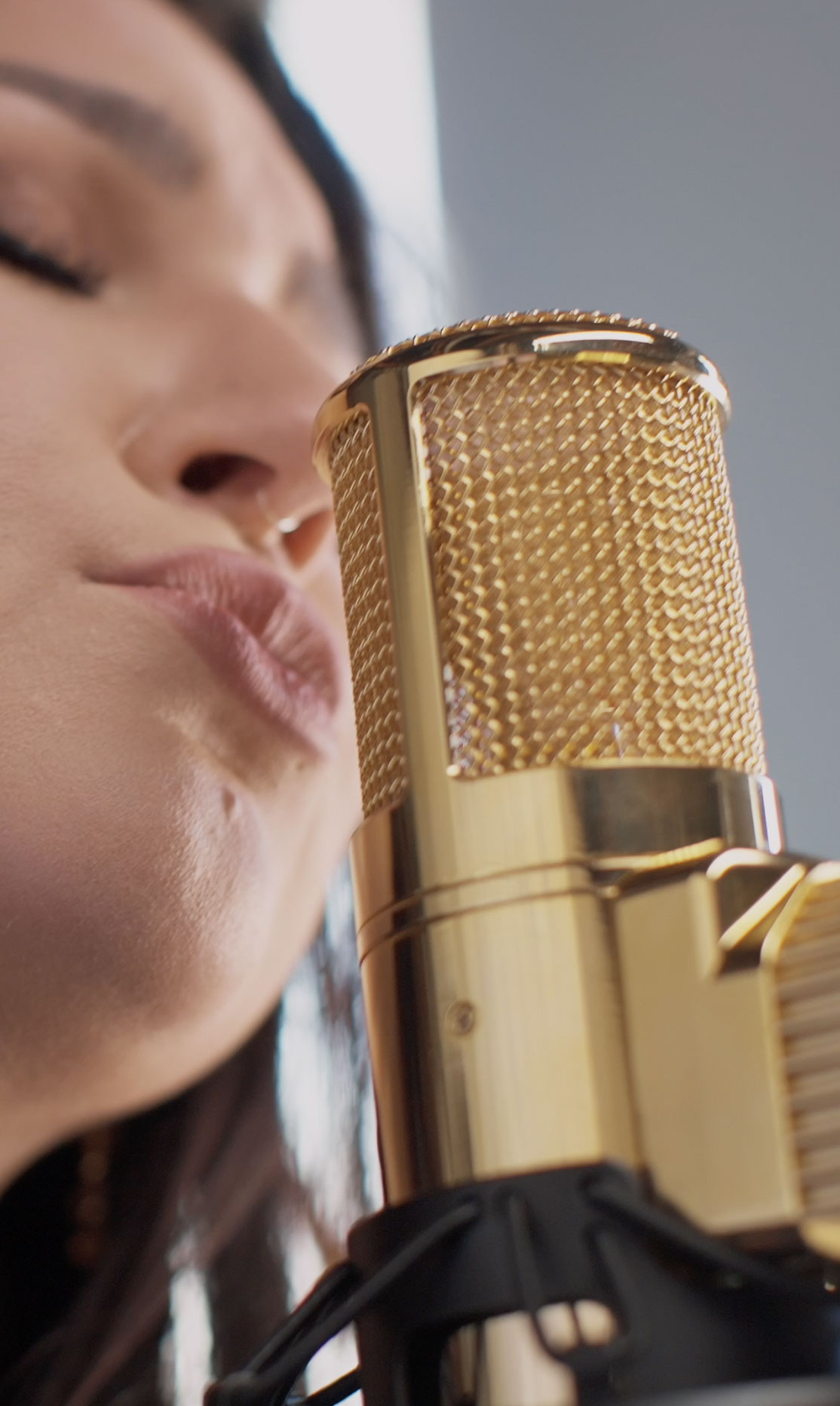
Furthermore, initiatives like the “Golden Mic Artist Accelerator” program are actively working to retain local talent by providing free recording and video production resources to emerging artists [12].
Mapping the Future
When looking at the economic impact of music in Texas—an industry that generates over $31.7 billion in annual economic activity statewide—the potential for growth in emerging markets like Corpus Christi is immense [13].
Austin will likely always be the festival capital, and Houston will remain an industry heavyweight. However, Corpus Christi offers something different. It provides a coastal, bicultural environment where genres naturally collide. It offers an affordability that larger Texas cities have lost, making it an attractive incubator for young artists.
With a rich historical foundation, a resilient community of independent venues, and newfound strategic support from city leadership, the pieces are falling into place. Corpus Christi is no longer just a nostalgic stop on the Texas music map. It is a city actively tuning its instruments, ready to reclaim its status as a vibrant, essential voice in the chorus of Texas music.